Description
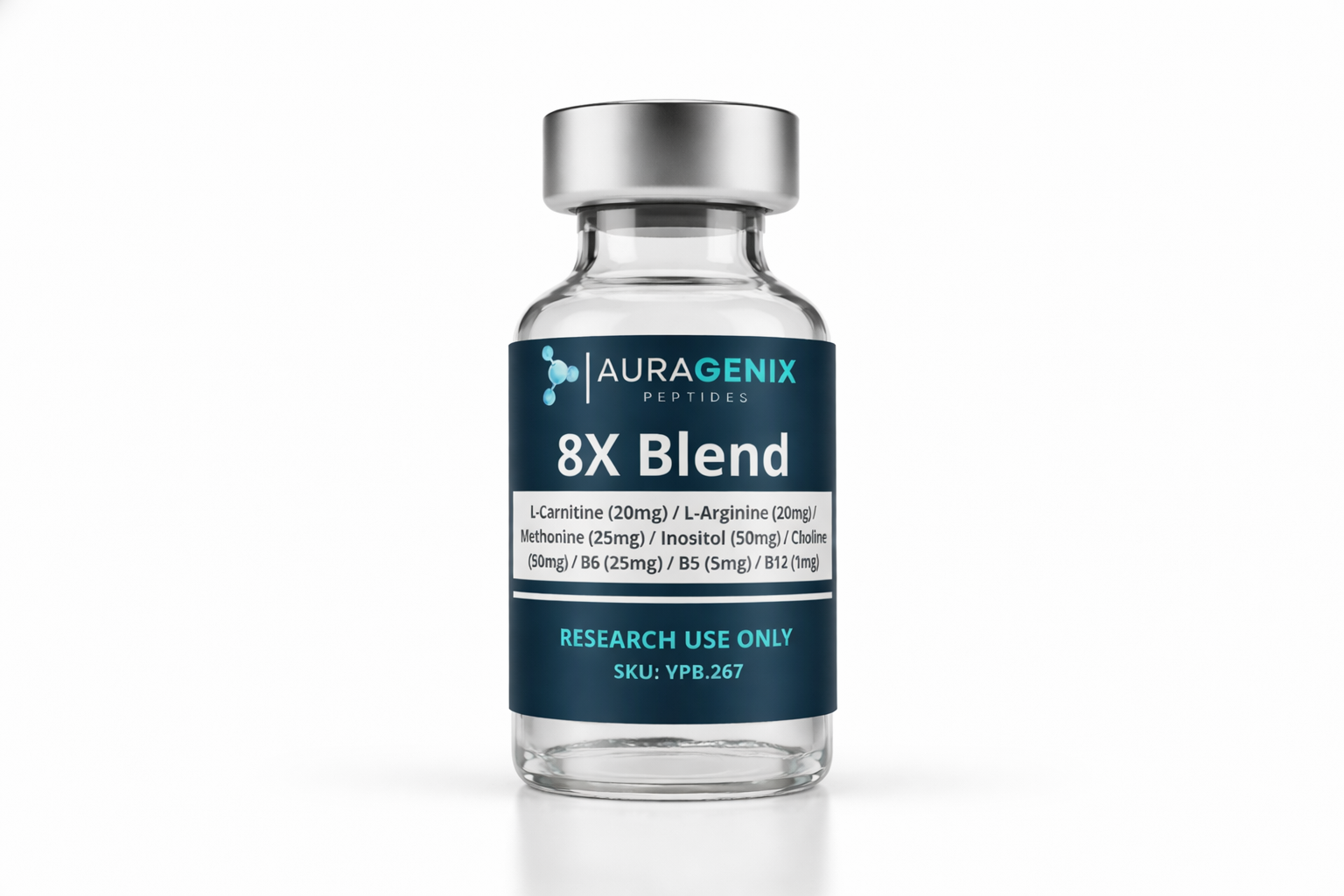
8X Blend L-Carnitine L-Arginine Methionine Inositol B Vitamins is a research material supplied for controlled laboratory environments and analytical compound characterization studies. This product is intended exclusively for non-clinical research applications involving biochemical analysis, method development, and investigational laboratory workflows conducted within qualified research facilities.
This multi-component research blend combines several well-characterized biochemical compounds that are commonly referenced in laboratory research settings for analytical evaluation, compound interaction studies, and method development workflows. The formulation is supplied strictly for investigational use and is not intended for human or veterinary consumption. All research involving this material must be conducted within approved laboratory environments and in accordance with institutional research policies.
Composition
• L-Carnitine
• L-Arginine
• Methionine
• Inositol
• Vitamin B6
• Vitamin B5
• Vitamin B12
• Appearance: Research-grade material supplied in a sealed research vial
Research Focus (Non-Clinical)
Research materials composed of multiple biochemical components are commonly utilized in laboratory environments to support analytical workflows involving compound interaction profiling, stability assessment, and comparative analysis. Investigators may incorporate blended research materials into experimental designs focused on evaluating compound behavior within controlled systems, supporting analytical benchmarking and method optimization efforts.
Typical non-clinical research applications may include compound identity verification, purity assessment, and quantitative analysis using established laboratory methodologies. Analytical techniques such as high-performance liquid chromatography (HPLC), liquid chromatography–mass spectrometry (LC-MS), and other validated analytical platforms may be employed to assess component presence, consistency, and analytical performance within investigational workflows.
Within research environments, multi-component blends may also be evaluated as reference materials in comparative studies examining analytical response characteristics, compound compatibility, or system calibration. Research teams may examine how individual components behave within a combined formulation under standardized laboratory conditions to support assay development, analytical validation, and reproducibility testing. All experimental use should remain within non-clinical research scopes and follow documented laboratory protocols.
For Qualified Research Use Only
This research material is supplied exclusively for use by trained professionals operating within institutional, academic, or commercial laboratory environments. It is not intended for use as a drug, medical device, dietary supplement, or cosmetic ingredient. This material has not been evaluated by the U.S. Food and Drug Administration or any other regulatory authority for medical, therapeutic, or diagnostic use.
Investigators are responsible for ensuring that all research activities involving this material comply with applicable institutional policies, laboratory safety standards, and regulatory frameworks governing non-clinical research compounds. Use outside of controlled laboratory environments or by unqualified individuals is strictly prohibited.
Documentation & Quality Assurance
Each lot of this research material is sourced through a verified global supply chain with an emphasis on traceability, documentation integrity, and quality oversight. Where available, analytical documentation such as Certificates of Analysis and third-party laboratory reports may be obtained and reviewed as part of internal quality assurance workflows.
Analytical documentation is provided for research reference only and supports internal validation efforts, method development, and experimental repeatability. Independent third-party testing may be performed on select lots to verify compound identity, composition, and consistency relative to documented specifications. Researchers are responsible for determining the relevance and suitability of any provided documentation for their specific research objectives.
Important Notice
This product is intended strictly for laboratory research use only. It is not intended for human consumption, veterinary application, diagnostic use, therapeutic use, or clinical investigation. This material is not a drug, medical device, or dietary supplement and has not been approved, cleared, or evaluated by any regulatory authority for medical use.
All use of this research material must comply with applicable institutional guidelines, laboratory policies, and regulatory requirements governing non-clinical research compounds. Responsibility for proper use, documentation, and compliance rests solely with the purchasing institution and qualified research personnel.
Quality & Manufacturing
All research materials are sourced from carefully vetted domestic and international manufacturing partners that operate under quality systems consistent with ISO and cGMP principles. Manufacturing partners are evaluated for reliability, analytical transparency, and adherence to documented quality standards.
This research material is produced to meet defined internal specifications for identity and composition. Quality systems are reviewed periodically to support consistency across production batches. Packaging and labeling are designed to maintain material integrity throughout manufacturing, handling, and delivery to research facilities.
Laboratory Research Standards and Intended Use
This research material is supplied for use by trained professionals within institutional laboratory environments. Research teams commonly implement standardized verification and documentation practices to support consistency across analytical and investigational workflows. These practices may include confirmation of labeling accuracy, reconciliation of received materials with internal records, and maintenance of detailed experimental documentation.
Investigators may reference available analytical documentation as part of internal validation workflows while conducting independent confirmation steps appropriate to their study design. Maintaining accurate records supports data integrity, reproducibility, and alignment with institutional research standards. All experimental work involving this material should be conducted using validated methodologies, appropriate controls, and documented oversight within approved research settings.